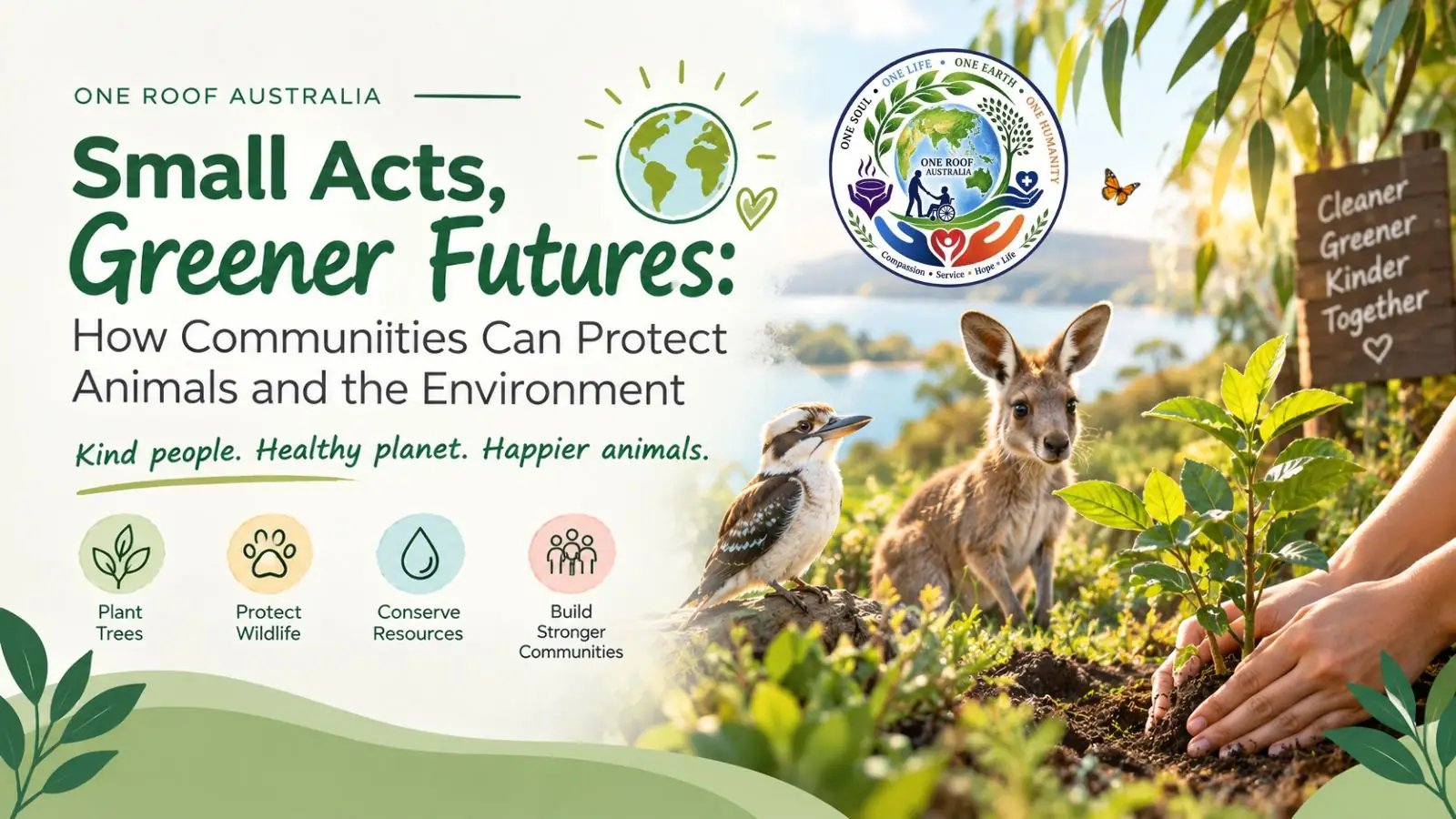
A tree offering shade on a hot day, a bird searching for water, or a dog waiting for a kind hand reminds us that our world is shared by many forms of life.
Protecting the environment does not always require grand gestures. Sometimes, it begins with planting a tree, saving water, picking up litter or caring for an animal in need.
Learning how to protect the environment starts with recognising that our everyday choices affect the world around us. When individuals and communities act with kindness and responsibility, small efforts can grow into meaningful change.
Why Do Animal Welfare and Environmental Conservation Matter?
Healthy environments provide food, water and shelter for people, animals and birds. Trees support wildlife, clean waterways sustain ecosystems, and natural habitats allow different species to survive.
Australia is home to extraordinary biodiversity. According to the Australian Government’s Department of Climate Change, Energy, the Environment and Water, around 84% of Australian plant species, 83% of mammals and 45% of birds are found nowhere else in the world.
However, habitat loss, pollution, invasive species and other pressures threaten this natural heritage. The department reports that more than 1,700 species and ecological communities are threatened and at risk of extinction in Australia.
These figures remind us that protecting nature is not simply about keeping our surroundings beautiful. It is about safeguarding the living systems that support life.
How Everyday Actions Affect Animals, Birds and Nature?
Litter left in parks can reach waterways. Plastic waste can injure wildlife, while discarded food packaging may trap or harm animals. Wasting water places additional pressure on a resource every living being needs.
Clean Up Australia’s FY25 Litter Report found that plastics accounted for 80.8% of all litter counted by its volunteers. Cigarette butts were the most commonly collected individual litter item, representing 23.6% of counted litter.
These findings show why responsible waste disposal matters. What we throw away does not simply disappear; it can remain in the environment and affect wildlife for years.
The good news? We can make better choices, one habit at a time.
Seven Simple Ways to Make a Difference
You do not need to be an environmental expert to help. Start with practical actions that fit your everyday life.
1. Plant suitable native trees
Choose native plants suited to your local climate and soil. With proper care, they can provide shelter and food for local wildlife, support biodiversity and help create greener neighbourhoods. Check local council guidance before planting large trees.
2. Conserve water
Turn off taps when they are not needed, repair leaks, take shorter showers and water gardens during cooler parts of the day. The Australian Bureau of Statistics reported that average household water use reached 174 kilolitres per household in 2023–24, up from 168 kilolitres in the previous year. Every sensible saving can help build more responsible habits.
3. Participate in community clean-ups
Join a local clean-up at a park, beach, roadside or neighbourhood green space. Use gloves, follow safety instructions and dispose of collected rubbish correctly.
4. Reduce waste and avoid littering
Carry reusable bags and bottles, avoid unnecessary single-use items, and recycle correctly according to local council rules. Always put rubbish in the appropriate bin.
5. Provide responsible care for animals
Ensure pets have suitable food, clean water, shelter and veterinary care. Keep pets secure and follow local rules to protect wildlife. If you find injured wildlife, contact a licensed wildlife rescue service rather than attempting risky handling yourself.
6. Support animal welfare initiatives
Consider volunteering with reputable animal shelters, wildlife rescue groups or community care organisations. Donations of money, food or supplies can help when they match an organisation’s actual needs.
7. Encourage others to take action
Share practical tips with family, friends, schools and neighbours. Organise a planting day, start a waste-reduction challenge or invite others to care for a local green space.
How Community Volunteering Creates Lasting Impact?
When people come together, individual actions become collective progress. A neighbourhood clean-up can remove rubbish from a shared space. A tree-planting activity can help restore suitable habitat. A community animal-care initiative can provide support to vulnerable animals.
Volunteering also builds connection. People exchange knowledge, develop a sense of responsibility and inspire others to participate.
The aim is not perfection. It is consistent, thoughtful action that helps communities become cleaner, greener and kinder.
How One Roof Australia Supports a Kinder, Greener World?
At One Roof Australia, we believe compassion should extend to people, animals and the planet we share. Through our Environmental Conservation and Animals & Birds Welfare programmes, we aim to encourage practical care through activities such as tree planting, water conservation, community cleanliness, and support for animals and birds in need.
Our approach begins with a simple belief: every life matters, and every positive action has the potential to inspire another. By bringing people together, we hope to nurture a culture of kindness, responsibility and respect for all living beings.
Small Actions Can Inspire Bigger Change
A cleaner street, a thriving native plant and a bird with access to water may seem like small things. Yet each reflects a choice to care for our shared home.
We cannot solve every environmental challenge overnight, but we can begin where we are. By conserving resources, reducing waste, protecting wildlife and supporting community initiatives, we can help create a healthier future for generations to come.
Be part of a community that cares for every life and protects our shared home. Together, let us turn small acts of kindness into greener futures.